History, with the rest of the story For the endlessly curious
Wait,
What?
History, With the
Rest of the Story.

Little stories. Remarkable past.

The past is weird. Let’s get into it.

Unexpected stories. Forgotten details. A few things your history book may have left out.

Explore the episodes
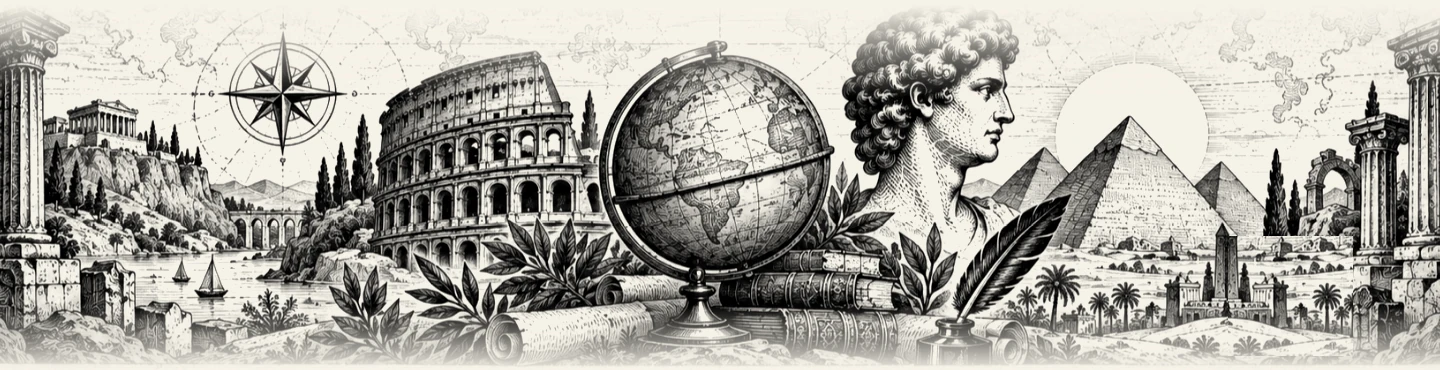
An engraved panorama of the ancient and early-modern world: classical columns, the Parthenon on its hill, a compass rose, the Colosseum, a globe on a stand among laurel and scrolls, a marble bust in profile, a quill in an inkpot, and the pyramids at Giza.

Plate I. The world, slightly rearranged. Tap a number for the story behind it, or the stamp, if you dare.

    II. The curiosity collection

    Well, that’s unexpected.

    Each Short opens a question. Each question leads somewhere: a fuller story, a source, something to try.

    Loading the latest short…

    Shorts from the channel

    Watch on YouTube

    New uploads from the channel show up here on their own.

      III. Beyond the short

      There’s always more to the story.

      The short starts the question. The story makes room for the details, the context, and the evidence behind it.

      The reading room · Featured

      The lantern that came before the pumpkin

      Long before orange pumpkins lined autumn doorsteps, people in parts of Ireland and Scotland carved faces into turnips and other root vegetables at the end of October. A small light inside turned a humble vegetable into something properly unsettling.

      Evidence

      Writers in the 19th century describe carved turnip lanterns in Ireland and Scotland at Halloween time.

      Interpretation

      Immigrants to North America are often credited with bringing the custom over, where pumpkins were larger and easier to carve.

      Folklore

      The tale of “Stingy Jack,” who tricked the Devil and wandered with a coal in a turnip, is a story, not a record.

      Read the full story Starting source: Wikipedia, “Jack-o’-lantern” (a secondary overview while we keep digging)

      IV. The curiosity club

      A little play. A lot of “wait, what?”

      For little historians and big ones, too. Test a hunch, follow a clue, or make something inspired by the past. No pop quiz panic required.

      History detective

      Supported, or not?

      4 claims · untimed · no sign-up

      Paper workshop

      Design a turnip lantern

      Pick a face, print it, draw your own on paper. No knives or candles needed.

      A drawn turnip lantern with the chosen face.

      Eyes
      Mouth

      A modern creative interpretation, not a replica of a particular museum object.

      Paint the past

      That marble bust? It probably wasn’t white.

      Many ancient statues were painted. Grab a brush and some real ancient pigments and bring this one back to life. There’s no wrong answer.

      Ancient pigments
      Tool
      Size

      Real reconstructions are careful, evidence-based guesses. Yours can be as wild as you like. Source: The Met, “Chroma: Ancient Sculpture in Color”

      Scribe school

      Write like it’s 1500 BCE (or so).

      Pick an ancient symbol, then trace it with your quill. Steady hands get the scribe’s seal.

      Choose a symbol

      V. Quick answers

      Questions people actually ask.

      Plain answers first. Fuller stories and sources one click away.

      • Were jack-o’-lanterns originally turnips?

        In parts of Ireland and Scotland, yes: people carved Halloween lanterns from turnips and other roots before pumpkins became the American default. Read the evidence.

      • Was the Statue of Liberty originally brown?

        Yes. Her copper skin looked brown like a new penny in 1886. The green is a protective patina from weather, not paint. Why she’s green.

      • Were ancient Greek statues painted?

        Often, yes. Many marble sculptures were polychrome. The all-white look is mostly what survived after paint wore away. About polychromy.

      • Why does the oldest globe miss the Americas?

        The Erdapfel (c. 1490–1492) was finished just before news of Columbus reached Europe, so the Americas aren’t on it. Read the timing.

      • What is Wait, What? History?

        A site and YouTube channel for unexpected history stories. We separate evidence, interpretation, and folklore, and we say when we don’t know yet.

      VI. Our story

      Less memorizing. More wondering.

      Wait, What? is a home for the overlooked details that make history human. Start with a good question, follow the evidence, and never confuse a great story with the whole story.

      • Question first. Every topic starts with something that makes you say “wait, what?”
      • Sources close by. Claims link to where they came from, right next to the claim.
      • Honest about the gaps. When the evidence runs out, we say so.

      Spot something off? Tell us. Until we have a dedicated corrections page, every story lists the sources it started from.